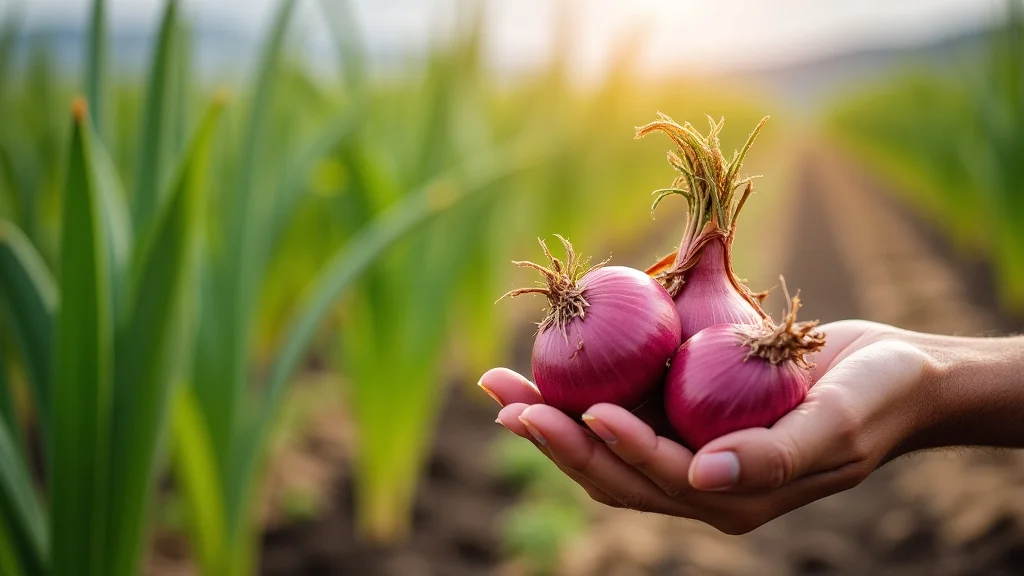
Growing onions can seem tricky at first. Many beginners wonder about the best ways to get big, tasty onions. It’s easy to get lost in all the different tips and tricks.
But don’t worry, we’ll break down Onion cultivation innovations into simple steps. You’ll learn how to make your onion patch the best it can be. Let’s get started on growing amazing onions!
Key Takeaways
- Learn about new tools and methods for growing onions.
- Discover how to choose the right onion varieties for your area.
- Understand the best soil and watering techniques for healthy onions.
- Find out how to protect your onions from pests and diseases.
- Explore ways to increase your onion yield and improve quality.
Advancements in Onion Planting Techniques
Understanding Soil Health for Onion Growth
Healthy soil is the foundation for growing great onions. Onions need soil that drains well but also holds enough moisture. Poor soil can lead to weak plants and small bulbs.
We will explore how to test your soil and what to add to make it perfect for onions.
Soil Testing and Amendments
Before you plant, it’s wise to test your soil. Soil tests tell you what nutrients are missing and the soil’s pH level. Onions prefer a slightly acidic to neutral pH, usually between 6.0 and 7.0.
If your soil is too acidic or alkaline, you can add lime to raise the pH or sulfur to lower it.
You can buy simple soil testing kits at garden stores. These kits are easy to use and give you quick results. Based on the test, you can add organic matter like compost or aged manure.
Organic matter improves soil structure, drainage, and fertility. It also helps the soil hold water better, which is vital for onion growth.
Adding too much of certain nutrients can harm onions. For instance, too much nitrogen can lead to lots of leafy growth but small bulbs. A balanced fertilizer, or one slightly higher in phosphorus and potassium, is often best for bulb development.
Always follow the recommended amounts from your soil test or fertilizer packaging.
Crop Rotation Benefits
Rotating crops means you don’t plant the same vegetable in the same spot year after year. This is very important for onion health. Onions can be susceptible to certain soil-borne diseases and pests.
Planting them in the same soil repeatedly can allow these problems to build up.
By rotating where you plant onions, you help break disease cycles. It also helps manage nutrient levels in the soil. After onions, it’s good to plant something different, like legumes (beans or peas) or leafy greens.
These plants have different nutrient needs and can help restore the soil.
A good rotation plan might involve planting onions in a spot for one year, then follow with a different crop for two or three years before returning onions to that same spot. This practice keeps your soil healthier and reduces the need for pesticides.
Water Management Systems
Watering is crucial, but overwatering or underwatering can cause issues. Onions need consistent moisture, especially during bulb formation. Innovations in watering include drip irrigation and soaker hoses.
These systems deliver water directly to the plant roots.
Drip irrigation is very efficient. It uses less water than overhead sprinklers and reduces weed growth because it doesn’t water the soil around the plants. It also helps prevent fungal diseases that can spread when leaves stay wet for too long.
Soaker hoses work similarly, slowly releasing water into the soil.
Smart irrigation controllers can also be used. These devices adjust watering schedules based on weather data. They ensure your onions get the right amount of water at the right time.
This leads to healthier plants and better bulb development. Consistent watering is key, especially in dry spells.
Innovative Onion Varieties and Their Impact
Choosing the right onion variety is a major factor in successful cultivation. Different onions are suited for different climates and purposes. Modern breeding has led to varieties that are more disease-resistant and have improved storage life.
Day-Length Classifications
Onions are classified by their response to day length. This is a critical factor for where they will grow best. Understanding this helps growers select varieties that will form bulbs in their region’s daylight hours.
Long-day onions need 14-16 hours of daylight to start forming bulbs. They are best suited for northern climates. Short-day onions need 10-12 hours of daylight and grow well in southern regions.
Intermediate-day or day-neutral onions are adaptable and can grow in a wider range of latitudes.
For example, if you live in Florida, planting a long-day variety will likely result in lots of green tops but very small bulbs. Conversely, planting a short-day variety in Minnesota might prevent bulb formation altogether. Selecting the correct type based on your geographic location is a fundamental innovation in onion growing.
Disease-Resistant Cultivars
Fungal diseases like downy mildew and purple blotch can devastate onion crops. Breeders have developed new onion cultivars that have a natural resistance to these common problems. This reduces the need for chemical treatments and leads to healthier harvests.
For instance, some new yellow onion varieties show much better resistance to downy mildew compared to older types. This means fewer fungicide sprays are needed, saving growers money and reducing environmental impact. These resistant varieties are a key part of sustainable onion cultivation.
When choosing seeds or sets, look for descriptions that mention disease resistance. This is an important step in preventing crop loss and ensuring a good yield, especially in areas where specific diseases are common. It’s a simple yet powerful innovation that helps gardeners and commercial farmers alike.
Hybridization and Performance
Hybrid onion varieties are created by cross-pollinating two different parent lines. This process often results in plants with superior traits. These traits can include higher yields, better uniformity of bulb size, and improved storage capabilities.
Hybrid onions often exhibit hybrid vigor, meaning they grow more vigorously and are more productive than their parent varieties. They can also be bred for specific qualities, such as a sweeter taste or a sharper flavor. Many commercially grown onions today are hybrids due to their reliable performance.
For example, a hybrid might be developed to mature earlier, allowing growers to get their crop to market sooner. Another hybrid might be bred for exceptional storage, meaning the onions can be kept for many months without spoiling. This extends the selling season and reduces waste.
Modern Pest and Weed Management Strategies
Keeping onions free from pests and weeds is essential for maximizing yield. Traditional methods often involved a lot of manual labor or chemical sprays. Newer techniques are more targeted and often more environmentally friendly.
Integrated Pest Management (IPM)
Integrated Pest Management, or IPM, is a comprehensive approach to pest control. It combines various methods to prevent pests and diseases from causing significant damage. The goal is to manage pests with the least risk to people and the environment.
IPM for onions includes regular monitoring of fields for signs of pests or diseases. Early detection allows for timely intervention before populations grow. It also involves using biological controls, such as beneficial insects that prey on onion pests.
For example, ladybugs can help control aphids.
Cultural practices are also a key part of IPM. This includes proper sanitation, crop rotation, and using resistant varieties as discussed earlier. Chemical pesticides are used only as a last resort, and when they are used, they are chosen carefully to be as safe as possible.
Beneficial Insects and Biocontrols
Using natural predators to control pests is a cornerstone of modern agricultural innovations. Many insects that might seem like pests in other contexts are actually allies in the onion patch. Releasing or encouraging these beneficial insects can significantly reduce the need for chemical pesticides.
For example, lacewings are voracious predators of aphids, thrips, and other small insects that can feed on onion plants. Predatory mites can be used to control spider mites. Even certain types of nematodes, which are microscopic worms, can be used to attack specific insect larvae in the soil.
Attracting beneficial insects to your garden is also important. Planting flowering plants like dill, fennel, and marigolds nearby can provide them with nectar and pollen, encouraging them to stay and reproduce in your area. This creates a more balanced ecosystem in your garden.
Weed Control Innovations
Weeds compete with onions for water, nutrients, and sunlight, severely impacting yield. Innovations in weed control focus on reducing labor and chemical use.
Flame weeding is one such method. It involves using a controlled flame to quickly pass over the soil and kill small weeds. This is done carefully to avoid damaging the onion plants.
It is particularly effective in the early stages of growth when weeds are small and easily destroyed.
Mulching is another effective weed control strategy. Applying a layer of organic mulch, such as straw or wood chips, around the onion plants helps suppress weed growth. It also conserves soil moisture and moderates soil temperature.
Specialized mulch films are also used in commercial settings, which can suppress weeds and warm the soil.
Technological Advancements in Onion Farming
Technology is playing an ever-increasing role in making onion cultivation more efficient and productive. From precision farming to advanced harvesting equipment, these innovations are transforming how onions are grown.
Precision Agriculture Tools
Precision agriculture uses technology to manage variations within a field. This allows farmers to apply resources like water, fertilizer, and pesticides only where and when they are needed. This leads to more efficient resource use and better crop performance.
Sensors can be used to measure soil moisture, nutrient levels, and even the presence of pests. Drones equipped with cameras can fly over fields to monitor crop health and identify problem areas. This data is then used to create variable rate application maps.
Variable rate technology (VRT) allows tractors and other equipment to adjust the application rate of seeds, fertilizers, or pesticides automatically as they move across the field. For example, if a sensor detects low nitrogen in a certain spot, the VRT system can increase the fertilizer application there. This fine-tuning ensures that each part of the field receives exactly what it needs.
Mechanization of Planting and Harvesting
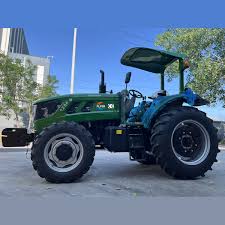
Manual planting and harvesting of onions are labor-intensive processes. Mechanization has made these tasks much faster and more efficient. Modern machinery can plant thousands of onion sets or seedlings per hour.
Onion harvesters have also seen significant improvements. These machines can lift onions from the ground, shake off excess soil, and gather them into windrows for drying. Some advanced harvesters can even sort and load onions directly into trucks.
This mechanization is critical for large-scale onion production. It reduces labor costs and allows farmers to manage larger acreages. It also ensures that onions are harvested at the optimal time, which is important for quality and storage life.
The consistency of mechanical harvesting also leads to more uniform product quality.
Data Analytics and Farm Management Software
Modern onion farming generates vast amounts of data. Farm management software helps growers collect, organize, and analyze this data. This information can reveal trends and insights that lead to better decision-making.
Software can track planting dates, fertilizer applications, pest control measures, and harvest yields for each field. By analyzing this historical data, farmers can identify which practices lead to the best results. They can also predict potential problems and plan accordingly.
For example, by comparing yield data from different fertilizer programs, a farmer can determine the most cost-effective nutrient strategy for their specific soil and climate conditions. This data-driven approach is a key aspect of modern agricultural innovation, making farming more precise and profitable.
Optimizing Yield and Bulb Quality
Ultimately, the goal of onion cultivation innovations is to produce more onions of better quality. This involves a combination of good practices and leveraging new technologies.
Nutrient Management for Bulb Development
Onions need a balanced supply of nutrients throughout their growth cycle. However, the types of nutrients and their timing can affect bulb size and quality. Phosphorus and potassium are particularly important for root development and bulb formation.
During the early stages, nitrogen is important for leafy growth. As the plant matures and begins to form a bulb, the focus shifts to phosphorus and potassium. Too much nitrogen late in the season can delay maturity and reduce storage potential.
Soil testing, as mentioned before, guides nutrient application. Modern methods include fertigation, where fertilizers are dissolved in irrigation water. This allows for precise nutrient delivery directly to the root zone, ensuring the plant gets what it needs when it needs it.
This controlled feeding directly impacts both yield and the firmness and size of the bulbs.
Harvesting and Curing Techniques
The way onions are harvested and cured significantly impacts their storage life and quality. Harvesting at the right time is crucial. Onions are typically ready when the tops begin to yellow and fall over.
After harvest, onions need to be cured. Curing is a process that allows the outer skins to dry and harden. This creates a protective barrier against moisture loss and disease during storage.
It also helps heal any cuts or bruises from harvesting.
Curing can be done in the field if the weather is dry and sunny, or in a well-ventilated barn or shed. Onions are usually spread in a single layer or in shallow bins. Good air circulation is key during the curing process.
Improper curing is a common reason for onions to rot in storage.
Storage Innovations
Storing onions properly can extend their usability for many months. Traditional storage involves cool, dark, and dry conditions. However, innovations are making storage more controlled and efficient.
Controlled atmosphere storage is used commercially. This involves managing the levels of oxygen, carbon dioxide, and temperature in storage facilities to slow down the onions’ respiration rate. This significantly extends their shelf life.
Research is also ongoing into natural compounds that can inhibit sprouting or decay in stored onions. These could offer alternatives to artificial methods or chemicals. The goal is to keep onions fresh and edible for longer periods without losing quality or nutritional value.
This reduces food waste and ensures availability.
Common Myths Debunked
Myth 1: Onions Can Be Grown Anywhere With Any Soil.
Reality: While onions are adaptable, they perform best in specific conditions. They require well-drained soil with a pH between 6.0 and 7.0. Poor soil drainage can lead to root rot, and extreme pH levels can hinder nutrient uptake.
Consistent moisture and adequate sunlight are also vital. Ignoring these basic needs will result in poor yields and weak bulbs.
Myth 2: All Onion Pests Can Be Treated With the Same Pesticide.
Reality: Different pests require different control methods. Using the wrong pesticide might be ineffective and can harm beneficial insects. Integrated Pest Management (IPM) emphasizes identifying specific pests and using targeted treatments, including biological controls and cultural practices, before resorting to broad-spectrum chemicals.
Rotating pesticide types is also important to prevent pest resistance.
Myth 3: You Just Need to Water Onions Whenever You Remember.
Reality: Onions need consistent moisture, especially when they are forming bulbs. Irregular watering can lead to uneven growth, split bulbs, or premature bolting (going to seed). Drip irrigation and soaker hoses are innovative methods that provide consistent, targeted watering, reducing stress on the plants and improving bulb development.
Myth 4: Bigger Is Always Better When It Comes to Onion Seeds.
Reality: For onion sets, size can matter for growth rate, but it’s the quality and variety that are most important. For seeds, focus on choosing varieties suited to your climate and disease resistance. Larger seeds don’t always mean bigger plants; it’s the genetic potential of the variety and the growing conditions that determine final bulb size and quality.
Frequently Asked Questions
Question: What is the best time to plant onions?
Answer: The best time to plant depends on your climate and the type of onion. Short-day onions are typically planted in fall or early winter in mild climates. Long-day onions are usually planted in early spring in cooler regions.
Check local planting guides for specific recommendations.
Question: How much space should I give my onion plants?
Answer: Space onion sets or seedlings about 4-6 inches apart in rows that are 12-18 inches apart. This spacing allows for good air circulation and room for the bulbs to develop fully without competing too much for resources.
Question: Why are my onions not forming bulbs?
Answer: This is often due to incorrect day-length variety for your region or insufficient sunlight. Onions need at least 6-8 hours of direct sunlight per day to form bulbs. Also, too much nitrogen fertilizer late in the season can encourage leaf growth at the expense of bulb formation.
Question: How do I know when my onions are ready to harvest?
Answer: Onions are ready to harvest when their tops begin to yellow and fall over. This usually happens about 90-120 days after planting, depending on the variety. Gently loosen the soil around a few plants to check bulb size.
Question: Can I grow onions from seed indoors?
Answer: Yes, you can start onion seeds indoors about 8-10 weeks before your last expected frost date. This gives them a head start, especially if you live in a region with a shorter growing season. Transplant the seedlings outdoors when the danger of frost has passed.
Conclusion
Exploring Onion cultivation innovations opens up better ways to grow your crops. From choosing the right seeds to managing soil and pests with new tools, every step makes a difference. You can achieve bigger yields and higher quality onions by adopting these modern practices.
Keep experimenting and enjoy your harvest!